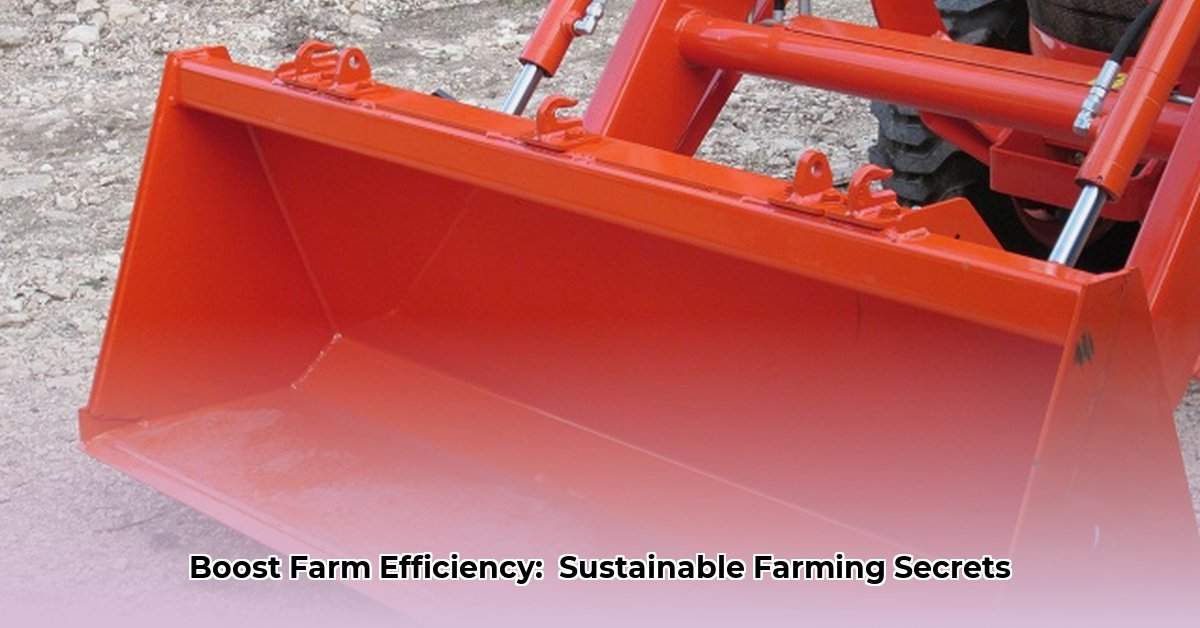
Quick Attach Tractor Buckets: Boosting Farm Efficiency and Sustainability
Farming demands peak efficiency. Equipment downtime translates directly to lost income and potential seasonal setbacks. Quick-attach tractor buckets offer a compelling solution. Modern designs, frequently incorporating robust materials like Hardox 450 steel (a highly wear-resistant steel), are engineered for longevity. This translates to fewer repairs, less downtime, and a reduced environmental impact from less frequent equipment replacement. It's a financially and environmentally sound investment in your farm's future. For more information on quick-attach systems, visit this helpful resource.
Finding the Right Bucket for the Job: Adaptability is Key
Choosing the right quick-attach bucket is crucial. Various sizes and configurations exist, tailored to specific tasks. Larger buckets excel at moving significant volumes of earth, while smaller options provide greater maneuverability for finer work. This precision minimizes soil compaction and disruption, contributing to long-term soil health and productivity. Healthy soil is the cornerstone of successful harvests, underscoring the link between equipment choice and sustainable farming practices. Isn't maximizing your yield and minimizing environmental impact a worthwhile goal?
Customizing Your Bucket: Fine-Tuning for Peak Performance
Further enhancing efficiency involves customizing your bucket. Adding interchangeable tooth bars allows optimization for various soil types and conditions. This adaptability is akin to having a versatile tool for diverse farming tasks, minimizing wear and tear and extending the bucket's lifespan. The initial investment in customization pays off handsomely through reduced maintenance and replacement costs, ultimately benefiting both the farm's financial health and environmental sustainability.
The Smart Economics of Sustainable Farming
High-quality quick-attach buckets, particularly those utilizing durable steels like Hardox 450, may have a higher initial cost. However, this is offset by significant long-term savings from reduced maintenance, repair, and replacement costs. A thorough cost-benefit analysis, considering factors such as workload, soil type, and task frequency, is essential for informed decision-making. Viewing this investment through a long-term lens reveals its true value—a commitment to the farm's enduring health and profitability.
Sustainable Practices: It’s More Than Just the Bucket
Sustainable farming requires a holistic approach. While durable equipment like quick-attach buckets plays a vital role in increasing efficiency and reducing waste, responsible material sourcing and end-of-life management are equally important. This includes considering recycling or responsible disposal options. Sustainable practices represent a commitment to a thriving agricultural future for generations to come.
Actionable Steps: Getting Started with Sustainable Farming Practices
Embarking on a journey towards sustainable farming involves several key steps:
- Assess Your Needs: Carefully analyze your farming operations to select the appropriate bucket size and features.
- Research Materials: Investigate durable materials like Hardox 450 steel for superior longevity and reduced environmental impact.
- Consider Customization: Evaluate the benefits of custom tooth bars and accessories to optimize performance for varied soil conditions and tasks.
- Perform a Cost-Benefit Analysis: Conduct a thorough analysis, comparing the long-term savings from reduced maintenance and replacements against the initial investment.
- Plan for the Future: Implement a strategy for responsible equipment replacement and disposal, minimizing environmental impact.
Working Together for a Sustainable Future: Stakeholder Perspectives
Sustainable agriculture requires collaboration among all stakeholders. Their diverse perspectives and objectives must align to achieve lasting change:
| Stakeholder | Short-Term Goals (0-1 Year) | Long-Term Goals (3-5 Years) |
|---|---|---|
| Farmers/Ranchers | Evaluate costs, improve efficiency, and explore the benefits of customization. | Implement responsible replacement strategies and explore equipment-sharing programs. |
| Manufacturers | Improve designs, conduct lifecycle analyses of bucket materials, and explore new, eco-friendly materials. | Develop more sustainable manufacturing processes and modular bucket designs. |
| Policymakers | Provide incentives for sustainable equipment adoption and encourage recycling programs. | Develop improved regulations for responsible end-of-life equipment management. |
| Researchers | Compare various bucket materials, assess their environmental footprint, and seek innovative materials. | Continue research into long-term sustainability solutions for agricultural equipment. |
How to Calculate Long-Term Cost Savings of Hardox Steel Tractor Buckets
Farming's inherent challenges include equipment breakdowns, expensive repairs, and costly downtime. Hardox steel offers a solution by significantly extending the lifespan of tractor buckets. Quantifying the financial benefits requires a comprehensive cost analysis:
Understanding the Cost Equation
Calculating long-term savings isn't straightforward. A multifaceted approach is required, extending beyond the initial purchase price. Key factors include:
- Purchase Price: The initial cost difference between standard and Hardox steel buckets represents the upfront investment in durability.
- Repair Costs: Hardox steel dramatically reduces repair expenses.
- Replacement Costs: The extended lifespan of Hardox steel significantly reduces the frequency of replacements, minimizing associated costs.
- Downtime Costs: Reduced repairs and replacements translate to less downtime, minimizing loss of productivity and income.
- Salvage Value: Hardox steel buckets generally retain higher resale value due to their extended lifespan.
Putting it All Together: A Step-by-Step Approach
- Gather Data: Collect data on your current bucket's repair, replacement, and downtime costs.
- Estimate Hardox Lifespan: Research the lifespan of a Hardox steel bucket under your specific conditions.
- Project Future Costs: Project future costs for both standard and Hardox steel buckets over a defined period.
- Calculate Net Present Value (NPV): Discount future costs to their present value to accurately compare costs.
- Compare Total Costs: Compare the total cost of ownership over the timeframe to determine the long-term savings.
Beyond the Numbers: The Larger Picture
The benefits extend beyond financial savings. Reduced equipment replacements minimize material waste and lessen the environmental footprint, contributing to sustainable farming practices. This represents a commitment to a resilient and profitable agricultural future.